
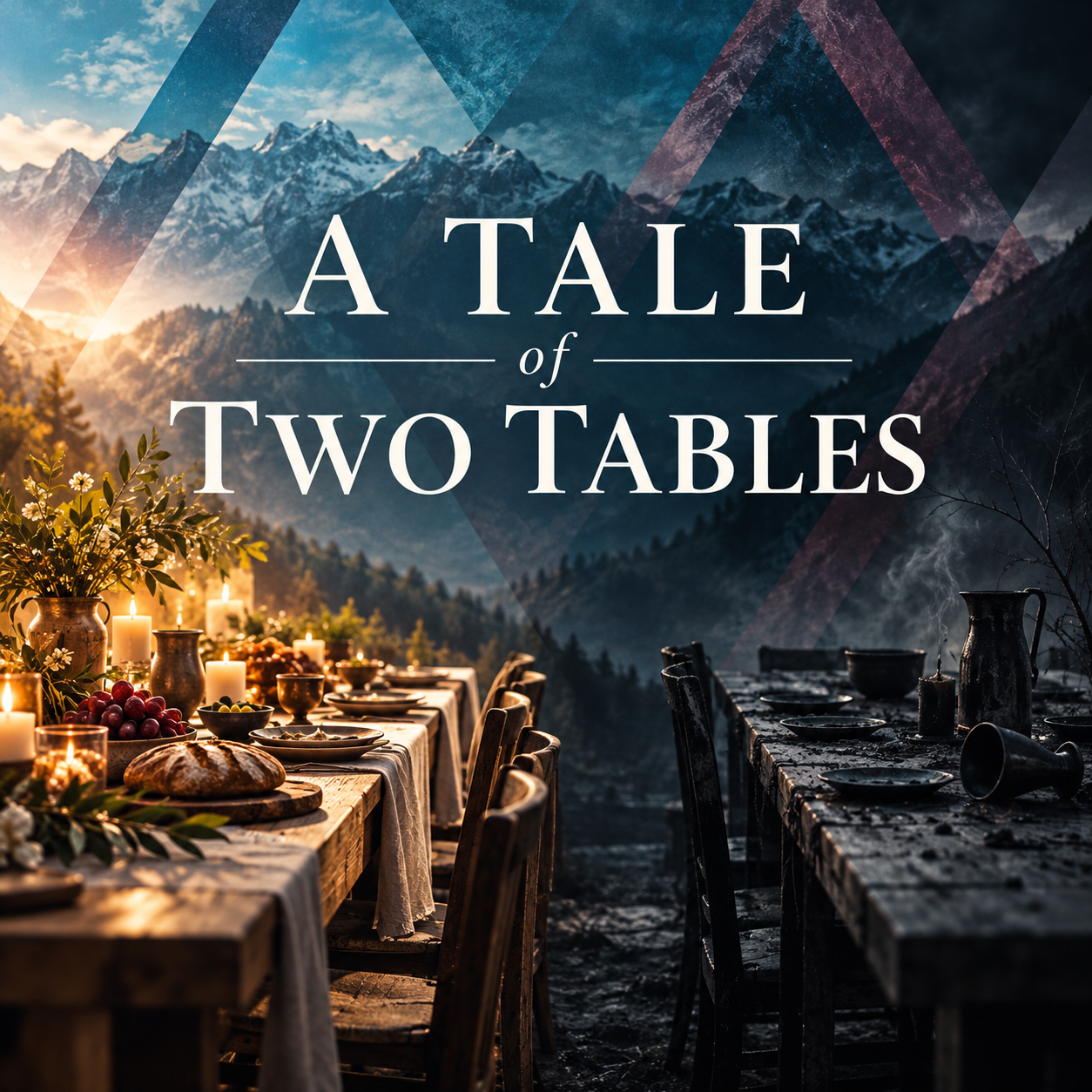
Every day we are being invited to a table.
Some invitations are obvious. Others arrive disguised as an advertisement, a notification, an opportunity, a relationship, or the quiet voice inside us insisting that happiness is just one decision away. We live surrounded by voices telling us what matters, what we should fear, what we deserve, and what will finally satisfy us. The question is not whether those voices are influencing us. The question is which voice we are learning to trust.
Proverbs 9 pictures this struggle through two women, Wisdom and Folly. Both call out. Both offer an invitation. Both speak to people who are still learning how to live. Yet the meals they serve could not be more different.
Wisdom has built a house and prepared a feast. She has done the work before issuing the invitation. Her table represents a life that has been formed patiently through truth, obedience, correction, prayer, community, and the fear of the Lord. Wisdom is not a shortcut to getting the answer we want. It is the slow work of becoming the kind of person who can recognize what is faithful and then have the courage to do it.
Folly offers something very different. She has not built anything, prepared anything, or cultivated anything. She simply knows how to advertise. Her promise is captured in the words, “Stolen water is sweet, and bread eaten in secret is pleasant.”
That is often how foolishness works. It offers pleasure without covenant, gain without labor, intimacy without faithfulness, influence without character, and certainty without patient discernment. Folly rarely announces where the road eventually leads. She simply tells us how good the next step will feel.
That makes one question especially important: If this choice becomes a pattern, and this pattern forms my character, where will it take me?
Wisdom teaches us to look beyond the immediate moment. It asks us to slow down, question our first reaction, invite people who will tell us the truth, and then do the next right thing. Perhaps most importantly, Proverbs teaches that one of the clearest marks of wisdom is teachability. Wise people are not people who are never wrong. They are people who become more willing to listen when they discover that they are wrong.
But the good news of Scripture is deeper than an instruction to simply make wiser decisions. All of us have already spent time at Folly’s table. If our hope depended on making enough wise choices to earn a place with God, none of us would belong there.
The gospel tells us that God did not simply send us better advice. He sent Jesus, whom the New Testament calls the wisdom of God. Christ entered the consequences of our foolishness, bore our sin at the cross, rose in victory, and now invites us into the life of God. He does not merely forgive our past decisions. By his Spirit, he begins reshaping our desires and teaching us to love what leads to life.
Every day, two tables are still being set before us. One promises immediate satisfaction while hiding the destination. The other calls us into a life that may require patience, humility, correction, and trust.
So perhaps the most important question this week is not simply, “What decision should I make?”
It is, “Which table is forming me?”
NOTE: This blog post was written from the longer sermon material that can be found HERE.
