

Easter stands at the center of the Christian faith.
It is not simply a tradition or a seasonal celebration. It is the moment that changes everything.
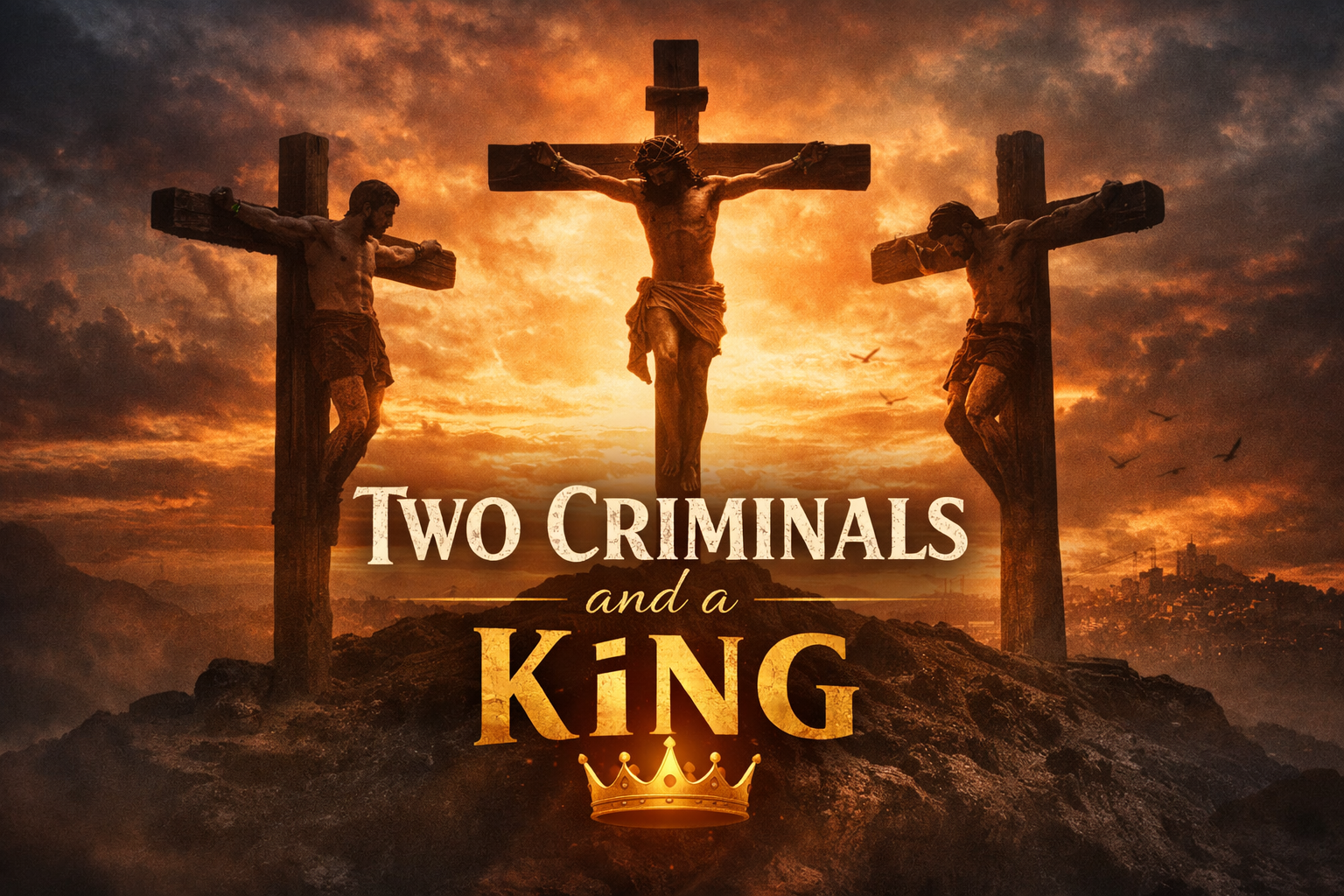
At the heart of Easter is a scene both simple and profound. Three crosses. Two criminals. One Savior. And in that moment, we see the clearest picture of grace and the two ways people respond to it.
The story in Luke 23 places us at the foot of the cross. Jesus is beaten, exhausted, and near death. Yet even in His weakness, He remains without sin. This is not a symbolic story or a philosophical idea. It is a real death. A real sacrifice. A real invitation. And it forces a real decision.
On either side of Jesus hang two criminals. They are remarkably similar. Both are guilty. Both are suffering. Both are unable to save themselves. Yet their responses could not be more different.
The first criminal speaks with bitterness. He mocks Jesus and demands rescue. “Save yourself and us,” he says. But his words reveal something deeper. He does not want redemption. He wants relief. He is still trying to control the outcome, still trying to make a deal with God. There is no humility, no confession, no surrender. Even in his final moments, he resists grace.
The second criminal takes a different posture. He acknowledges his guilt. He recognizes Jesus’ innocence. And then he makes a simple request. “Jesus, remember me.” No resume. No defense. No promises. Just need.
This is the turning point of Easter. The difference between the two men is not their past. It is their response. One clings to control. The other surrenders in faith.
Jesus’ response is immediate and stunning. “Today you will be with me in paradise.” In that moment, we see the heart of the Gospel. Salvation is not earned. It is received. There is no time for religious performance. No checklist to complete. Only belief. Only trust in the One who saves.
This is why the cross is such good news. Everyone wants credit for a victory they did not earn. Easter tells us that the victory has already been won. Jesus does not come down from the cross because staying on it is the only way to save us. What looks like weakness is actually the greatest act of strength the world has ever seen.
There is also a quiet figure in the story. Simon of Cyrene. Forced to carry Jesus’ cross for a moment, he walks behind Him, step by step. What begins as an interruption becomes an encounter. And it appears to change not just his life, but his family for generations. It is a reminder that God often works through ordinary people in unexpected moments.
Easter invites us into this same story. We all stand before the cross. We all bring our guilt, our need, our limitations. And we all must respond.
Will we resist, trying to control and negotiate? Or will we surrender, trusting that Jesus has done what we never could?
The difference is everything.
Three crosses still stand as a picture of the Gospel. Two responses. One Savior. And an open invitation that still speaks today.
