



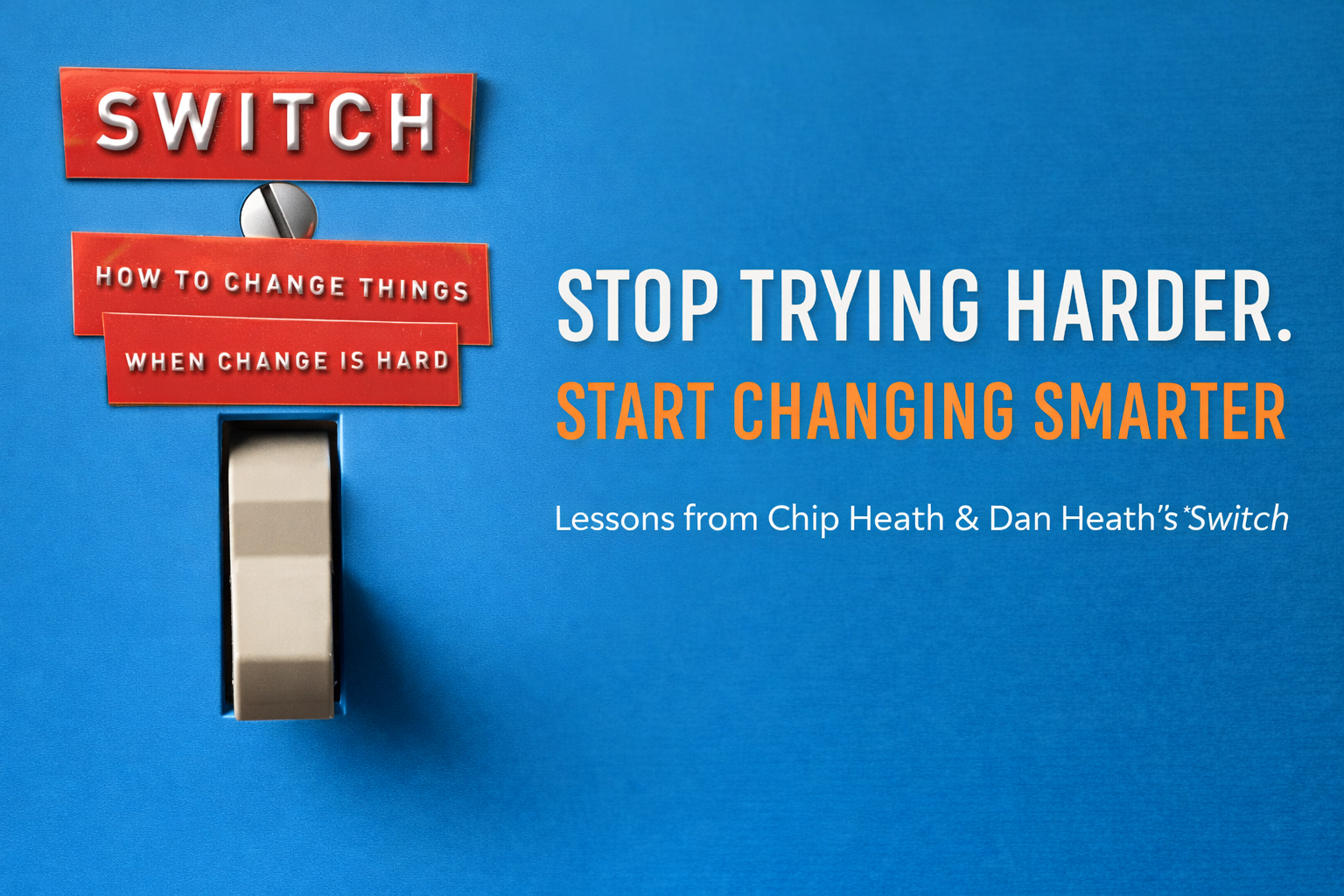
Switch: How to Change Things When Change Is Hard is one of those rare leadership books that actually does what it promises. It gives language for what we already feel: change is often not a knowledge problem; it is a behavior problem. We know what we should do. We just do not do it. The Heath brothers make the case that lasting change happens when you work with the whole person, not just their intentions.
The core framework is simple and memorable. Inside every person is a Rider (the rational mind that plans), an Elephant (the emotional self that wants comfort or safety), and a Path (the environment and habits that make change easier or harder). When change fails, it is usually because the Rider has insight but no traction, the Elephant has energy but no direction, or the Path keeps pushing you back into old patterns.
What makes Switch stand out is how practical it feels. The advice is not “try harder.” It is “make it smaller, make it clearer, make it easier.” The book is full of stories and examples, but it also gives repeatable tools: find the bright spots, script the critical moves, shrink the change, grow your people, and shape the path. In other words, you do not only motivate. You design.
For anyone leading people, raising kids, discipling others, building a team, or trying to become healthier in their own life, Switch gives a wise, hopeful approach. It assumes change is possible, but it refuses to be naïve about how hard it is. That combination alone makes it worth reading.
Three Lessons for a Follower of Jesus
#1 Change is Discipleship, not Willpower
Most Christians have experienced the frustration of “I want to change, but I keep doing the same thing.” Switch helps explain why. The Rider can agree with truth, but the Elephant runs on desire, fear, comfort, and cravings. That mirrors what Scripture shows us: transformation is not just mental agreement, it is the shaping of love and longing.
For a follower of Jesus, this is a reminder that discipleship is not merely information transfer. It is formation. Jesus does not just say, “Learn my teaching.” He says, “Follow me.” That is embodied. Repeated. Practiced. Lived.
Jesus shaped change through practices. Prayer. Community. Confession. Sabbath. Worship. Generosity. These are not spiritual extra credit. They are how the heart is rewired over time. The Heaths would call it shaping the Path. The church calls it spiritual formation.
Do not treat your spiritual growth like a motivational speech. Treat it like a trellis. Build rhythms that make obedience more natural.
#2 Start with the Bright Spots
One of the best ideas in the book is “Find the bright spots.” Instead of obsessing over what is broken, study what is working and do more of it. For a Christian, that connects deeply with the way God works in sanctification. God often gives us small evidences of grace before we see full change.
If you are trying to grow in prayer, your “bright spot” may be the one day you actually prayed without rushing. If you are trying to change your speech, your bright spot might be the one conversation where you stayed gentle. If you are trying to be consistent in Scripture, it may be the mornings that felt steady and life-giving.
This book gives permission to say: I do not need to reinvent everything. I need to repeat what is already bearing fruit.
Pay attention to the moments when obedience felt possible. That is often where God is already meeting you. Repeat those patterns with gratitude, not guilt.
#3 “Small Steps” is Not Shallow Faith. It is Wise Faithfulness
The Heath brothers insist on shrinking change. Not because the goal is small, but because people change through momentum. And momentum comes from wins you can actually achieve.
For Christians, this corrects a common trap. We set spiritual goals that are real, but not reachable. We go from zero to perfection. Then we collapse and feel shame. Switch offers a better path: script the critical moves and make the next step painfully clear.
Instead of “I want to be a more loving person,” you script it:
- “When I walk in the door, I will put my phone down for ten minutes.”
- “When I feel defensive, I will pause and ask one question before responding.”
- “When I am tempted to complain, I will name one specific gratitude out loud.”
That is not legalism. That is wisdom. It is repentance with a plan.
Faithfulness is usually built in small decisions repeated over time. That is how the Elephant learns a new way.
